

Crownmate Guide
High Frequency Wand for Hair Growth: How It Works, What Research Shows and How to Use It
Electrical stimulation is being studied as a possible way to support hair growth. A few human studies have reported encouraging results, and laboratory researchers have observed changes in hair follicles exposed to electrical or radiofrequency treatments. A high frequency wand passes a gentle high-frequency current through a gas-filled glass electrode. It belongs to the broad family of electrical scalp-stimulation technologies researchers are exploring for hair. Human studies of related devices have reported gains in hair density and thickness, while laboratory research has examined how follicle cells respond to electrical and radiofrequency stimulation. Wand-style devices also have laboratory evidence of antibacterial effects. The Crownmate HF Wand brings this approach into a simple 3 to 5 minute at-home routine. The research is on related technologies rather than on this specific wand, so it is best viewed as a supportive part of a consistent scalp-care routine.

Can a high frequency wand support hair growth?
There are some promising findings in the wider field of electrical scalp stimulation. In a 1990 controlled study, 29 of 30 men using a pulsed electrostatic-field device showed regrowth or no further hair loss after 36 weeks. A 2025 pilot study of a wearable low-level electrical stimulation device reported a 19.3% increase in hair density after six months. In 2026, a sham-controlled trial of that wearable device found a greater increase in hair density than the sham treatment.
These findings add to the growing research interest in electrical stimulation for hair. The studies explored several approaches, including pulsed electrostatic fields, wearable low-level electrical stimulation and radiofrequency treatment. The Crownmate HF Wand is also an electrical stimulation device, using a neon-gas-filled glass electrode to deliver high-frequency electrical stimulation at the skin surface. Its method of delivering energy is different from the devices used in those trials, but it sits within the same broad area of electrical scalp stimulation.
What is a high frequency wand?
A high frequency wand sends a high-frequency alternating current through a glass electrode filled with gas. When the device is switched on, the gas inside the electrode glows. Neon-filled electrodes typically produce an orange-red glow. The electrode is moved over the skin as part of a short treatment.
The Crownmate HF Wand has variable intensity control and four interchangeable glass heads. The comb-shaped head is intended for the scalp, the mushroom-shaped head covers broader areas, and the smaller heads are designed for more focused use. The wand can be used on the scalp, face and neck according to the instructions supplied with the device.

How electrical scalp stimulation works
The Crownmate HF Wand uses a high-frequency electrical current delivered through a gas-filled glass electrode. When switched on, the gas inside the electrode glows as the current passes through it. The electrode is moved gently over the skin, creating a local treatment sensation that may include mild tingling or warmth. The intensity is adjustable, so you can begin at the lowest setting and find a comfortable level.
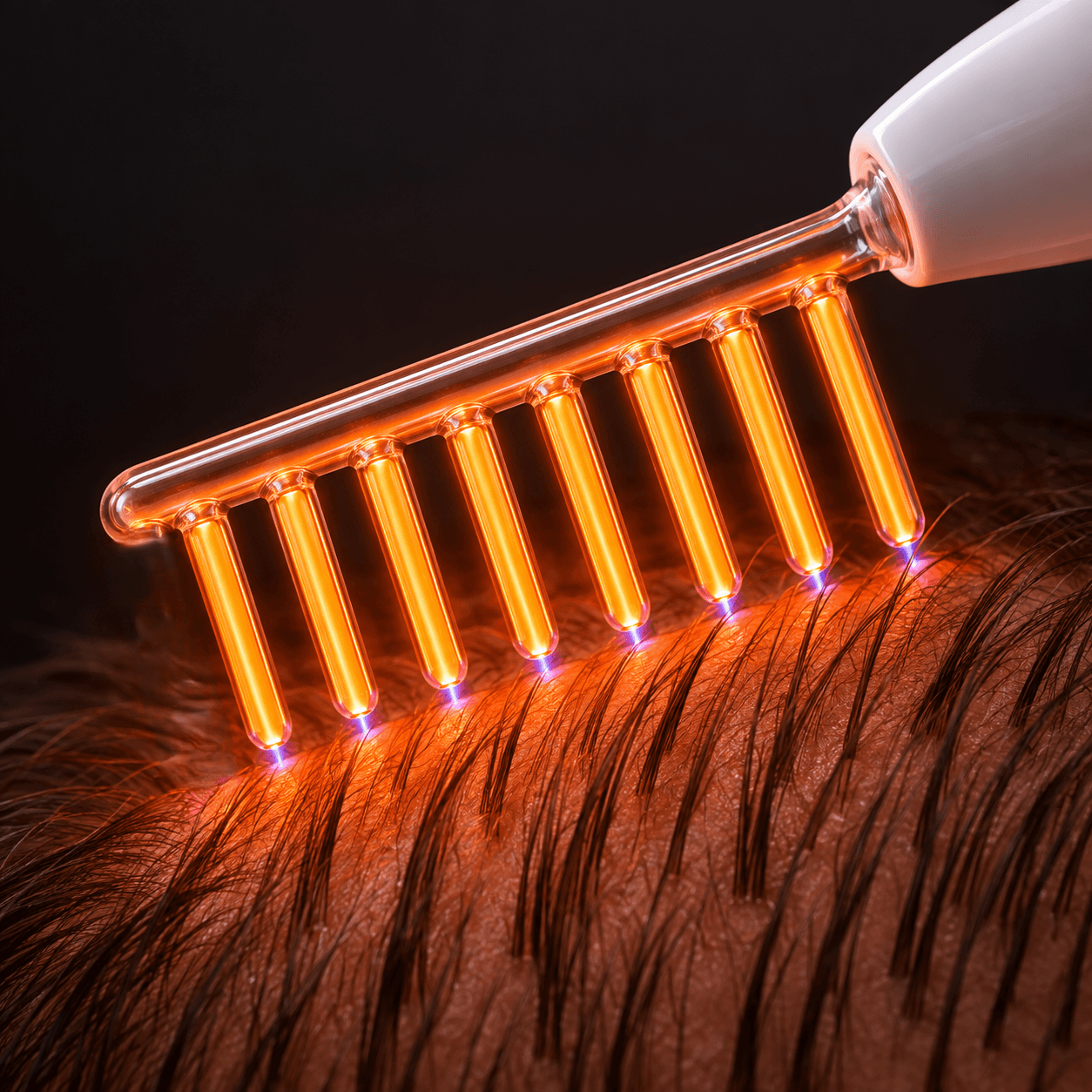
01
Contact & Current
The glass electrode makes gentle contact with the scalp, delivering a mild high-frequency current across the treated area.
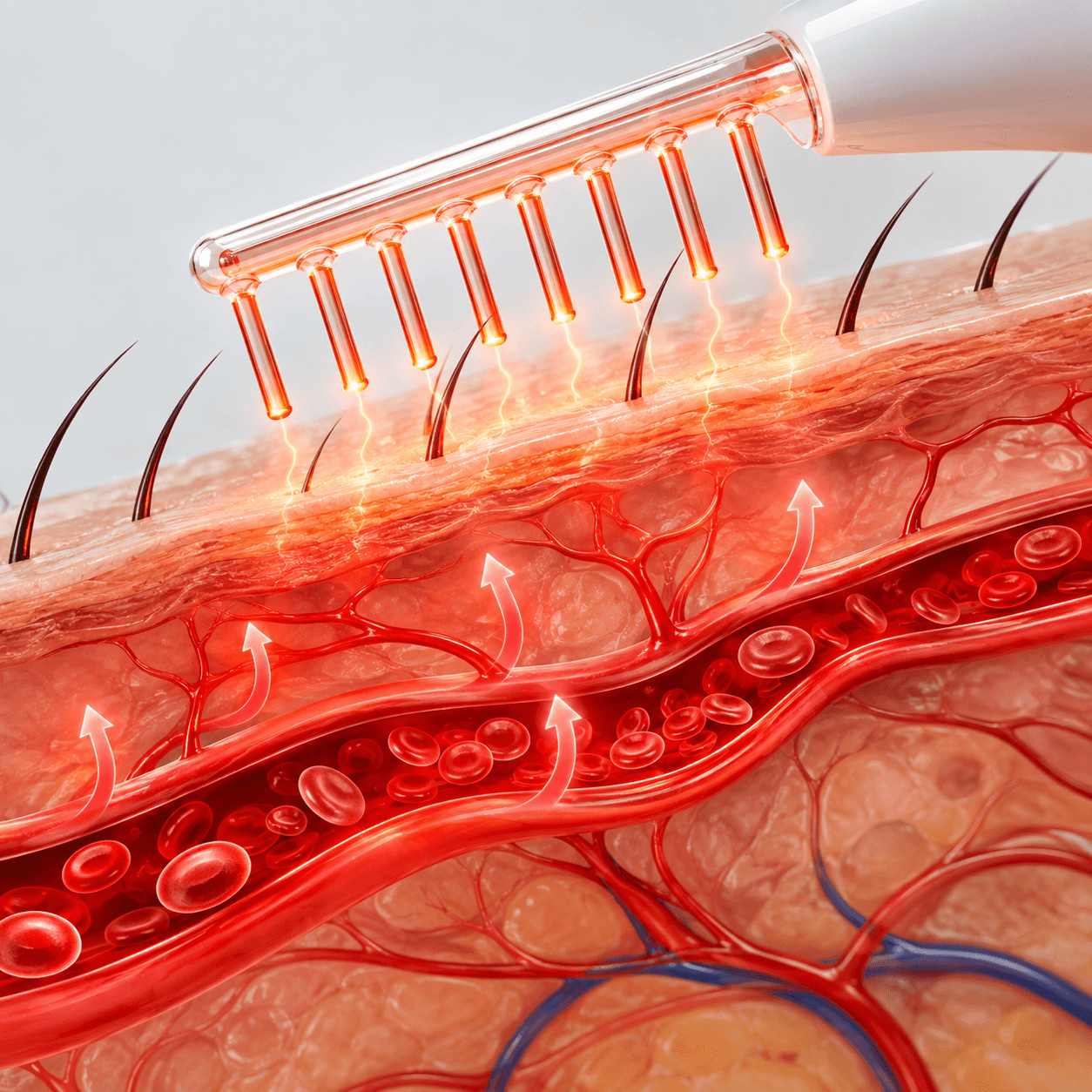
02
Micro-Circulation
Electrical stimulation of the scalp is understood to encourage local blood flow to the treated area.
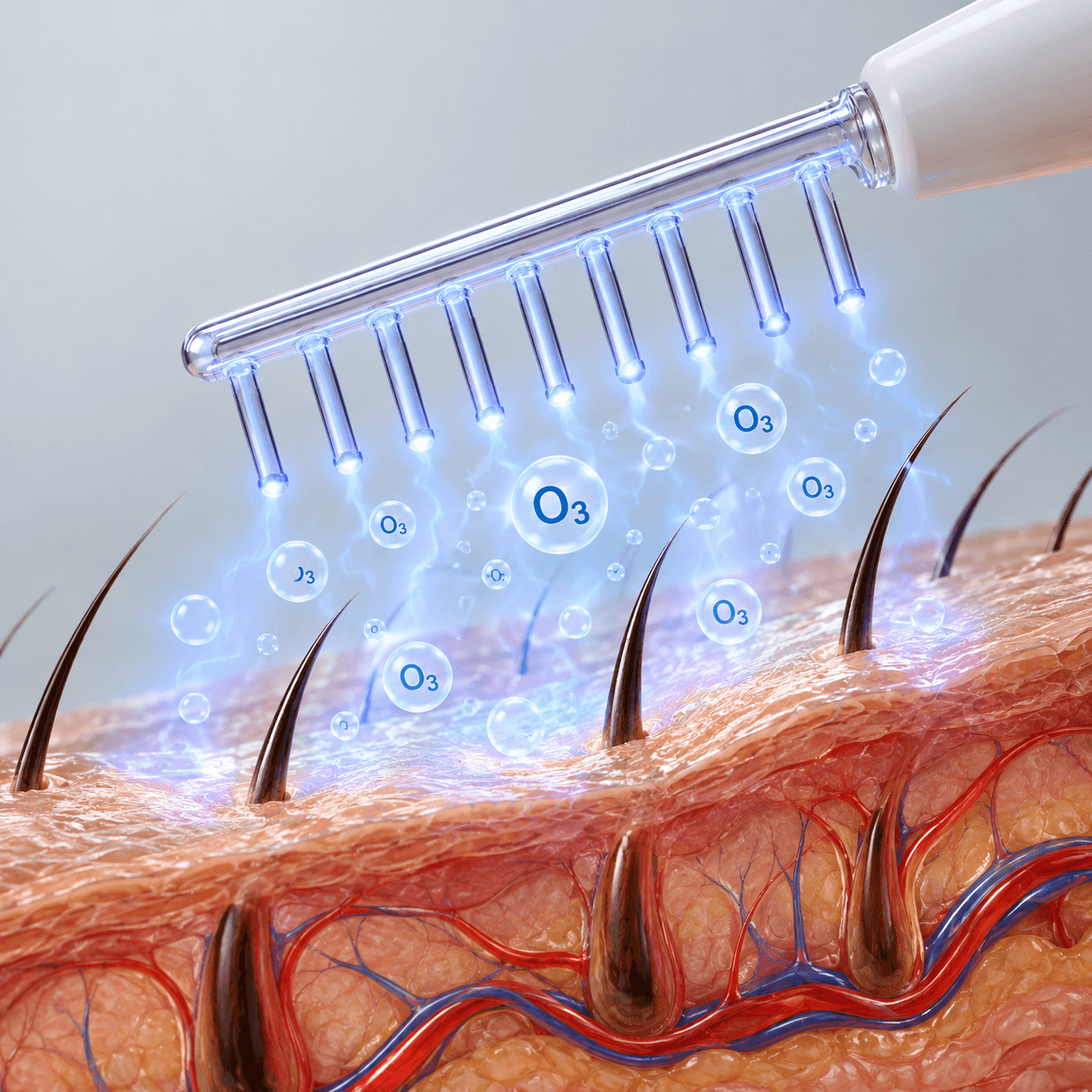
03
Mild Ozone Effect
The corona discharge produces a small amount of ozone at the scalp surface as the wand passes over it. Ozone has antimicrobial properties, with antibacterial and antifungal effects observed in laboratory studies.
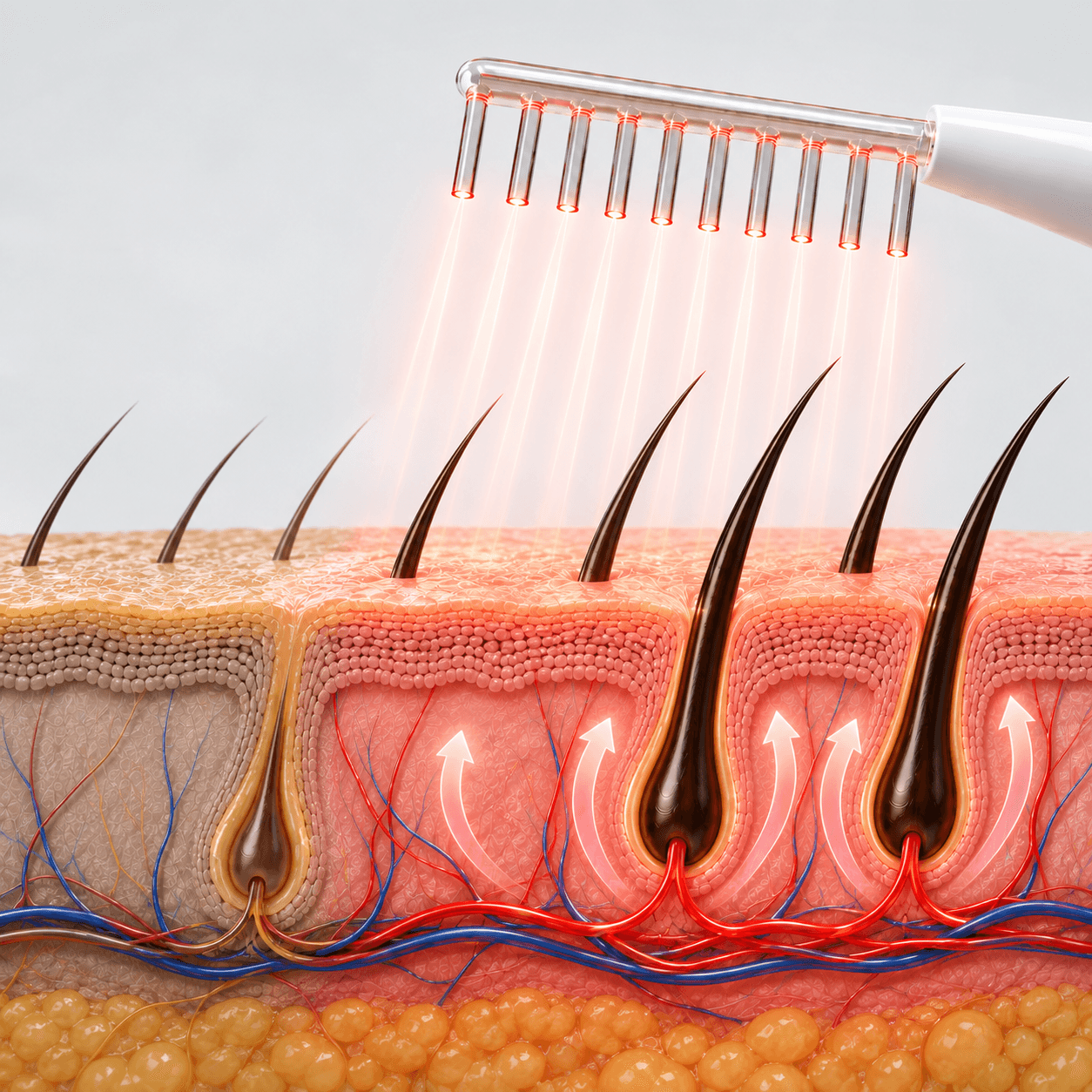
04
Consistent Use
With regular sessions, ongoing scalp stimulation may help support a healthy environment around the hair follicles.
What the research shows
Controlled study of a pulsed electrostatic field (1990)
Maddin, Bell and James studied a pulsed electrostatic-field treatment in men over 36 weeks. The treatment group had a 66.1% increase in mean hair count from baseline, compared with 25.6% in the control group. In the treated group, 29 of 30 participants showed regrowth or no further hair loss. This was a study of a specific pulsed-field system, not a glass-electrode high frequency wand.
Read the 1990 studyExtended-use follow-up (1992)
A follow-up paper reported results from a subset of the original study and a crossover group. Thirteen participants received active treatment for 70 weeks, while 14 participants moved from sham treatment to active treatment. Hair counts increased during active treatment, but complete data were available for only a small group. The authors noted that this limits how widely the results can be applied.
Read the 1992 follow-upAt-home electrical stimulation pilot study (2025)
In a pilot study, 22 men were recruited to use a wearable low-level electrical stimulation device for 30 minutes a day over six months. Twenty-one participants completed the three-month assessment and 20 completed the full six months. The paper reported a 12% increase in hair density at three months and a 19.3% increase at six months, alongside an 8.8% increase in hair thickness. It was an open-label study without a control group, and the device was a wearable electrotrichogenic system. The study was supported by the device manufacturer.
Read the 2025 pilot studySham-controlled wearable-device trial (2026)
A randomized, double-blind trial enrolled 81 men and compared the wearable electrical stimulation device with a sham device. After 24 weeks, the active group had a mean 24.4 more hairs per cm² than the sham group in the prespecified analysis. This is stronger clinical evidence for that particular wearable technology, but it does not test a neon glass-electrode wand.
Read the 2026 clinical trialLaboratory study of radiofrequency currents (2024)
Researchers exposed donated hair follicles from people with androgenetic alopecia to 448 kHz currents using capacitive resistive electrical transfer (CRET). In this ex vivo experiment, cell proliferation increased and cell death decreased in some follicle cell populations. The researchers called for clinical trials. This was a laboratory treatment using a specific radiofrequency system, not a neon glass electrode.
Read the 2024 laboratory studyThe research is worth following, especially the sham-controlled trial published in 2026. Together, these studies show the range of ways researchers are exploring electrical stimulation and its potential role in hair and scalp care. The Crownmate HF Wand uses its own neon-gas glass-electrode approach as part of an easy-to-follow scalp-care routine.
Ozone and the faint smell
As the electrical current passes through the glass electrode, a small amount of ozone forms around the tip, which may cause a faint, sharp smell. Ozone has antimicrobial properties, and laboratory studies of high frequency devices have found antibacterial effects. One in-vitro study using a neon-gas electrode observed time-dependent antibacterial activity against bacteria including E. aerogenes and S. aureus. A separate laboratory study reported reductions across several bacterial and fungal species. These findings are from controlled laboratory settings, and further research is needed to understand how they translate to use on the scalp. Use the wand in a well-ventilated room and avoid deliberately inhaling the smell.
Everyday benefits of the HF Wand
The Crownmate HF Wand makes it easy to add a short electrical-stimulation session to your personal-care routine. Its adjustable intensity lets you start gently and choose a comfortable setting, while the interchangeable glass electrodes make it suitable for the scalp, face and neck.
- A quick 3 to 5 minute session per treatment zone.
- Adjustable intensity for a more comfortable experience.
- Four interchangeable glass electrodes for different areas.
- One device for scalp, face and neck care.
- Ozone generated at the electrode has shown antibacterial activity in laboratory studies.
The antibacterial findings are from laboratory research. They do not establish that the wand treats scalp infections, dandruff or hair loss.
How to use your Crownmate HF Wand

- Start with a clean, dry scalp. Use the wand before applying oil or serum. Keep both the scalp and glass electrode dry.
- Choose the comb-shaped electrode. Attach it securely and check the glass for cracks before switching the device on.
- Begin at the lowest intensity. Increase it gradually until you feel a mild tingle. The sensation should remain comfortable.
- Move slowly across each section. Keep light contact and glide over the area. Do not hold the electrode in one place.
- Follow the recommended session. Treat each zone for 3 to 5 minutes, two to three times a week. Do not increase the time or intensity to try to speed up results.
- Apply your usual products afterwards. Once the session is complete, switch off the wand and then apply your oil or serum if you use one.
- Clean and store the electrode. Follow the manual for cleaning, and make sure the glass head is fully dry before storing it.
If you choose to track your hair, take a photo once a month in the same lighting and from the same angles. Hair changes slowly, and photos are more useful than checking the mirror every day.
Who should avoid using a high frequency wand?
Do not use the wand if you have a pacemaker or another implanted electronic device, metal implants in the treatment area, epilepsy, or if you are pregnant. The product is not intended for children. If you have a heart condition, a skin or scalp condition, or are unsure whether electrical devices are suitable for you, speak with a healthcare professional before use.
Do not use the wand on broken, irritated or wet skin. Keep it away from water and remove metal jewellery from the area being treated. Do not use it near alcohol-based sprays, flammable oils or other flammable products. Stop if you feel pain, burning or unusual discomfort. Check the glass electrode before each use and follow the complete safety instructions in your user manual. Sudden, patchy or unexplained hair loss should be assessed by a dermatologist.
Frequently asked questions
Will a high frequency wand make my hair grow?
Research into electrical stimulation for hair is encouraging, with human studies of related devices reporting gains in hair density and thickness. The HF Wand brings high-frequency electrical stimulation through a neon-gas-filled glass electrode into an easy at-home routine. Use it consistently as part of your scalp-care routine and track changes with monthly photos over three to six months.
How often should I use the Crownmate HF Wand?
Use it two to three times a week, for 3 to 5 minutes per zone. Start at the lowest intensity and follow the instructions in your manual.
Does the treatment hurt?
You may notice a mild tingling sensation or warmth. It should not be painful. Lower the intensity or stop if the sensation becomes uncomfortable.
Can I use oil or serum with the wand?
Use the wand on a clean, dry scalp first. Switch it off when you finish, then apply oil or serum if it is part of your routine. Do not use the wand on a wet or freshly oiled scalp.
Which glass electrode should I use for my scalp?
Use the comb-shaped electrode for the scalp. The other heads are intended for broader or more focused areas. Refer to the manual for the correct attachment and technique.
Can I use it on my face and neck?
The Crownmate HF Wand is designed for the scalp, face and neck. Use the appropriate glass head for each area and follow the manual's instructions.
Why does the wand produce a smell?
The electrical discharge at the glass electrode produces a small amount of ozone, which has a sharp smell and has shown antibacterial activity in laboratory studies. Use the wand in a well-ventilated room.
Where can I get the Crownmate HF Wand?
Explore the Crownmate High Frequency Wand for product details, attachments and specifications.
More ways to support your scalp
The HF Wand is one option in a broader scalp-care routine. You can also read our guides on scalp massage for hair growth, red light therapy helmets and derma stamping and serum absorption.
Research and further reading
- Maddin WS, Bell PW, James JH (1990). The biological effects of a pulsed electrostatic field with specific reference to hair. Electrotrichogenesis. International Journal of Dermatology.
- Maddin WS, Amara I, Sollecito WA (1992). Electrotrichogenesis: further evidence of efficacy and safety on extended use. International Journal of Dermatology.
- Jellard S, Moore S, Chacón-Martínez CA (2025). Novel Electrotrichogenic Device Promotes Hair Growth in Men With Androgenetic Alopecia: A Pilot Study. Journal of Cosmetic Dermatology.
- Chacón-Martínez CA et al. (2026). Efficacy, Safety, and Tolerability of a Wearable Electrotrichogenic Device in Men with Androgenetic Alopecia: A Randomized, Double-Blind, Sham-Controlled Trial. Dermatology and Therapy.
- Martínez-Pascual MA et al. (2024). Effects of RF Electric Currents on Hair Follicle Growth and Differentiation: A Possible Treatment for Alopecia. International Journal of Molecular Sciences.
This guide is for general education and is not medical advice. Results vary. If you are concerned about hair loss, consult a qualified dermatologist.
Explore the Crownmate HF Wand
See the glass electrodes, adjustable intensity and usage details.
View the High Frequency Wand