

Crownmate Guide
Scalp Massage for Hair Growth: What the Research Shows and How to Make It a Daily Habit
Scalp massage is one of the simplest habits you can add to a hair-care routine, and early research gives it a reason to be there. Studies have explored hair thickness, self-reported outcomes, blood flow and relaxation. Here is what the research found and how to build a gentle routine at home.

Does scalp massage help hair?
Scalp massage is one of the simplest habits you can add to a hair-care routine, and early research gives it a reason to be there. In a 24-week study, nine healthy men who massaged their scalp for 4 minutes a day had thicker hair at the end than at the start. In a survey of people with pattern hair loss, 68.9% of those who followed a standardized massage routine reported that their hair loss stabilized or that they saw regrowth. Lab and physiology studies add a plausible explanation: massage stretches follicle cells, increases blood flow and helps you relax.
The findings make scalp massage a simple, low-cost habit worth considering as part of a consistent hair-care routine. The human study was small, and the survey was self-reported with no control group, so further research will help clarify how much massage can contribute to hair thickness over time.
How scalp massage works
Scalp massage involves gentle pressure and movement across the scalp. Researchers have studied several possible effects, including mechanical stimulation of tissue, temporary changes in local blood flow and relaxation. These processes may overlap, but their individual contributions to hair outcomes are not yet clear.
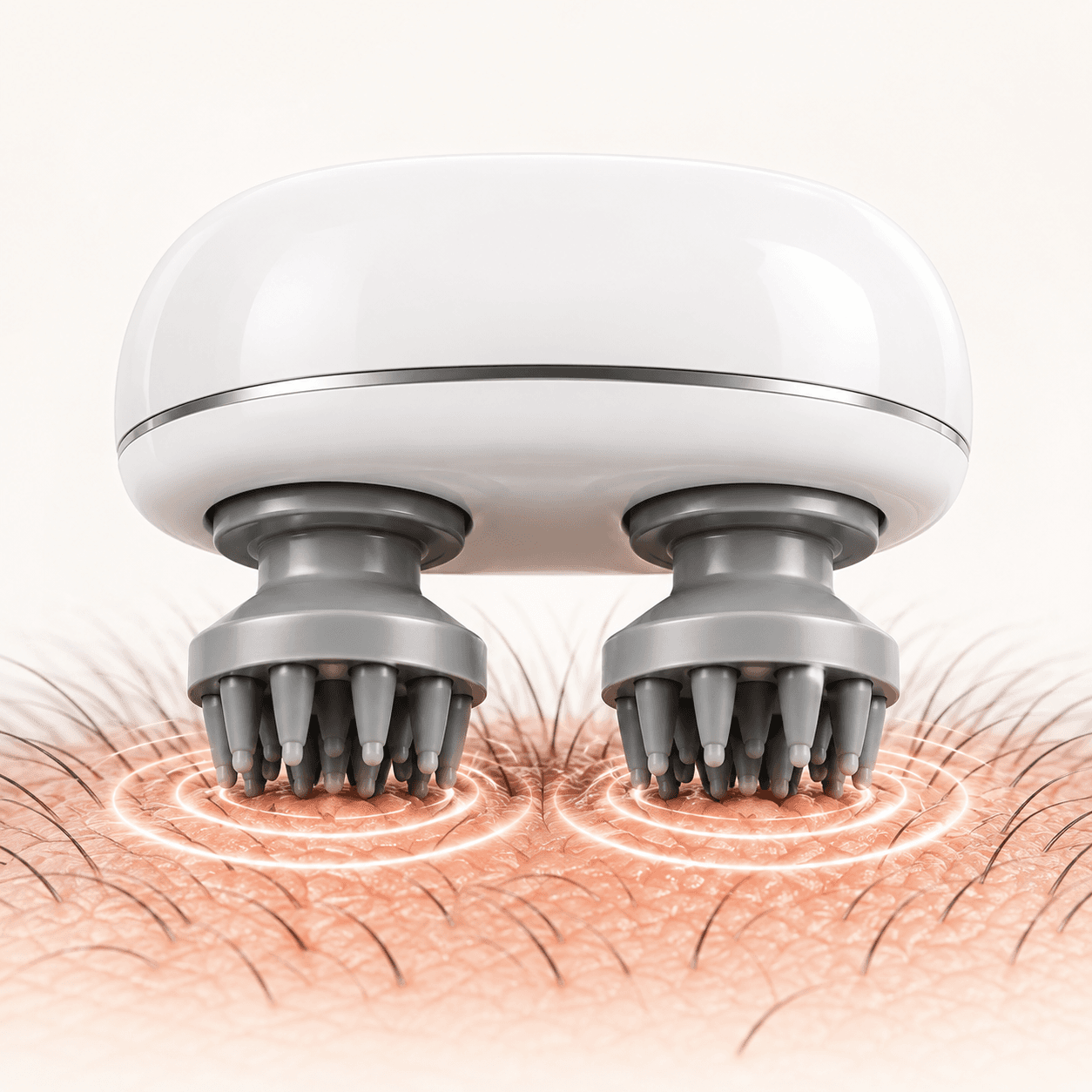
01
Mechanical stimulation
Gentle pressure and movement across the scalp begin the massage. You can use your fingertips or a massager such as the Crownmate Pulse Pro, whose soft silicone nodes provide kneading and vibration. In a blood-flow study, pressing movements produced the largest increase in local scalp blood flow.
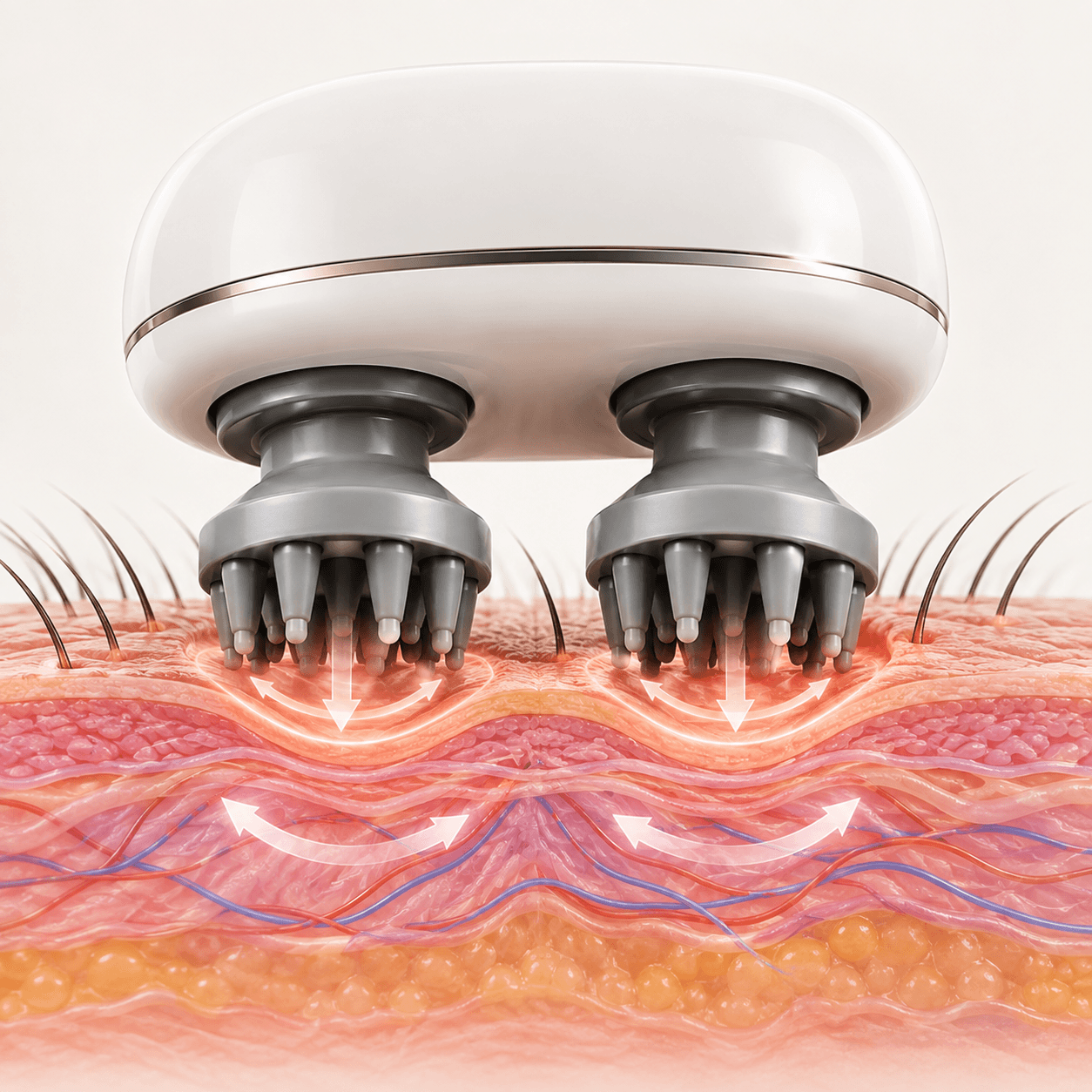
02
Stretching force
Massage moves the scalp tissue and creates mechanical forces beneath the surface. In laboratory work, stretching human dermal papilla cells for 72 hours changed the activity of thousands of genes, including genes involved in the hair cycle. This is one proposed explanation for the thickness finding in a small human study.
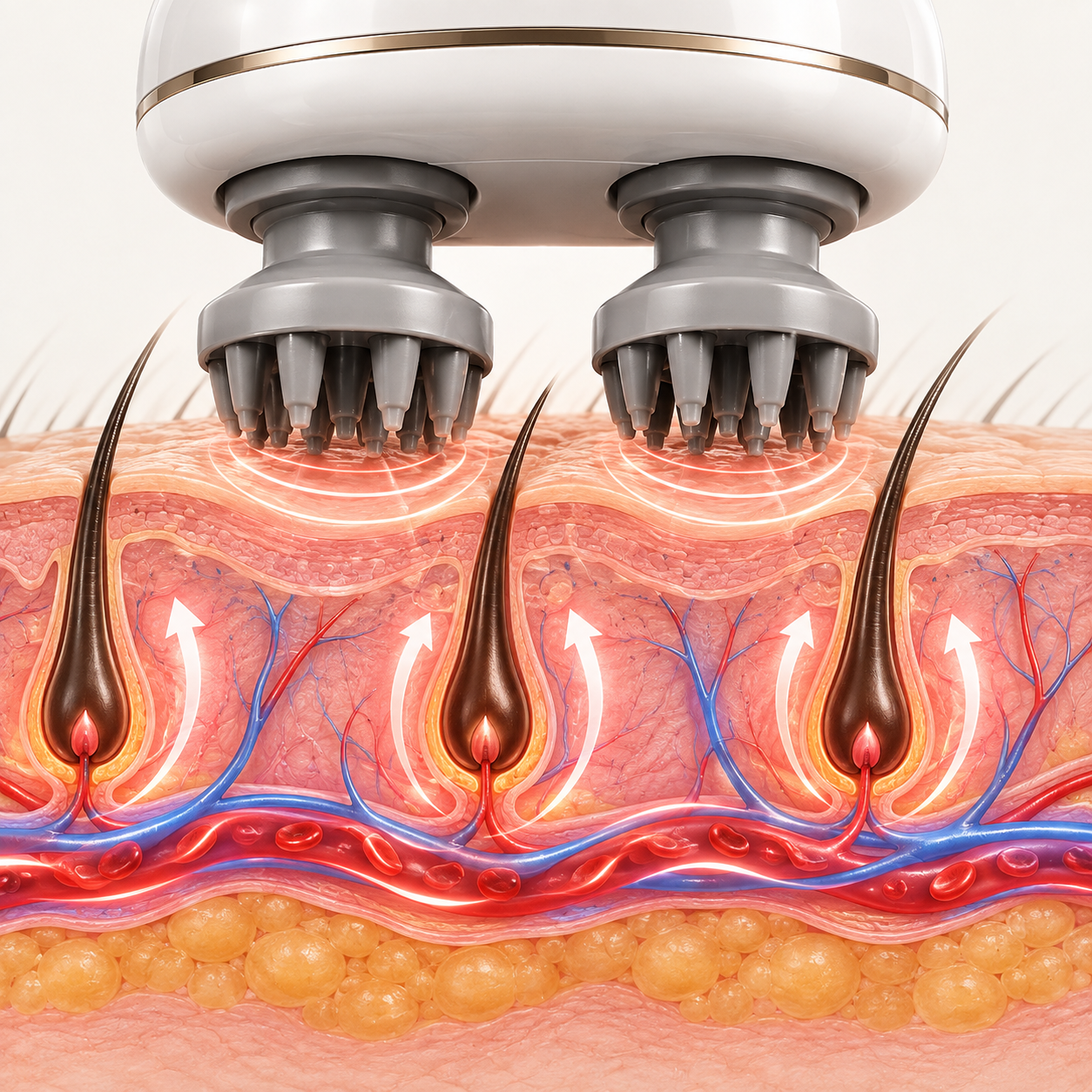
03
Improved circulation
Massage can temporarily increase local blood flow. A 2014 physiology study found that a roughly 3-minute self-massage increased measured scalp blood flow by about 120% above baseline, with the effect continuing for more than 20 minutes.
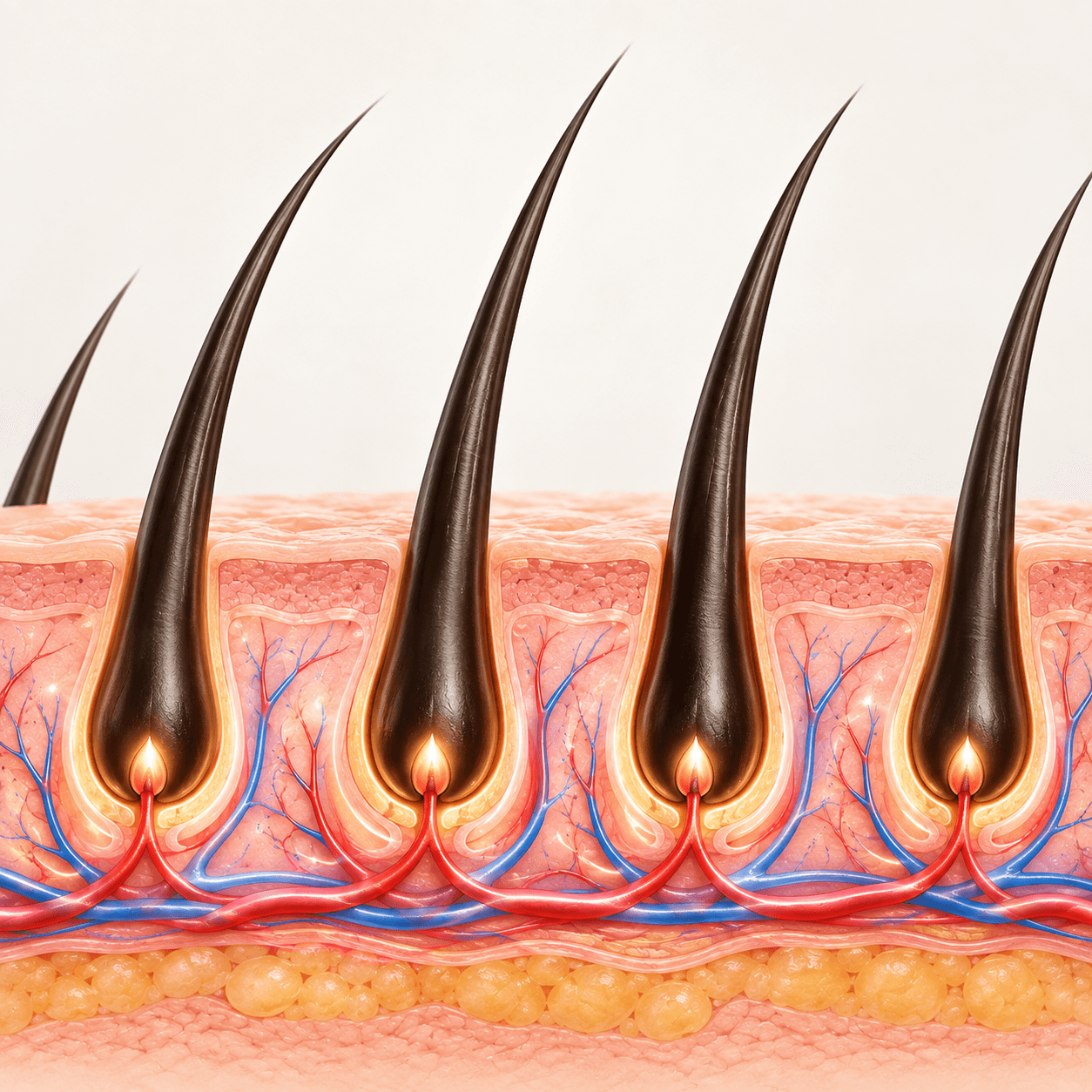
04
Consistent use
The available research looked at repeated routines rather than a one-off session. A short, comfortable daily habit is easier to maintain than occasional long sessions. In the survey, more total massage time was linked to better self-rated results.
These are proposed mechanisms and measured short-term effects. Increased blood flow or changes in laboratory cell activity do not, by themselves, prove that a massage routine will produce visible hair regrowth.
What the research shows
Small human study and laboratory work (2016)
In a study published in Eplasty, nine healthy men used a massage device for 4 minutes a day on one side of the scalp for 24 weeks; the other side was left untreated. Hair thickness on the massaged side increased from 0.085 mm at baseline to 0.092 mm at week 24. However, the study found no significant difference between the massage and control sides, and hair growth rate did not change. In separate laboratory work, stretching human dermal papilla cells for 72 hours altered the expression of thousands of genes, including genes involved in hair cycling. The cell experiment does not establish the same effect in people.
Self-reported survey (2019)
In Dermatology and Therapy, 327 people with androgenetic alopecia who had tried a standardized routine completed a survey. Of those respondents, 68.9% reported that their hair loss had stabilized or that they had experienced regrowth. More total massage time was associated with better self-rated outcomes, and reported benefits did not vary by age, gender or use of other treatments. This was a retrospective, self-reported survey with no control group, so it cannot show that massage caused the reported changes.
Scalp blood-flow study (2014)
Researchers in the Journal of the Society of Cosmetic Chemists of Japan compared basic massage techniques. Pressing produced the largest increase in measured scalp blood flow. A roughly 3-minute self-massage raised blood flow by about 120% above baseline, and the increase continued for more than 20 minutes. The study measured circulation and scalp mobility, not hair growth.
Relaxation and stress measures (2013)
A separate study reported lower salivary cortisol and improved self-rated relaxation after scalp massage. This supports a possible relaxation benefit, but it did not test hair growth or show that massage treats stress-related hair loss.
Taken together, the studies provide early signals about hair thickness, self-reported changes, circulation and relaxation. The findings point to several ways scalp massage may support a hair-care routine, including hair-thickness changes, circulation and relaxation. Larger studies can help clarify the role of different massage techniques and routines.
Explore the published research
These papers examine scalp massage, hair thickness, self-reported hair changes and short-term physiological effects. The evidence is preliminary and does not establish the effectiveness of a specific massager.
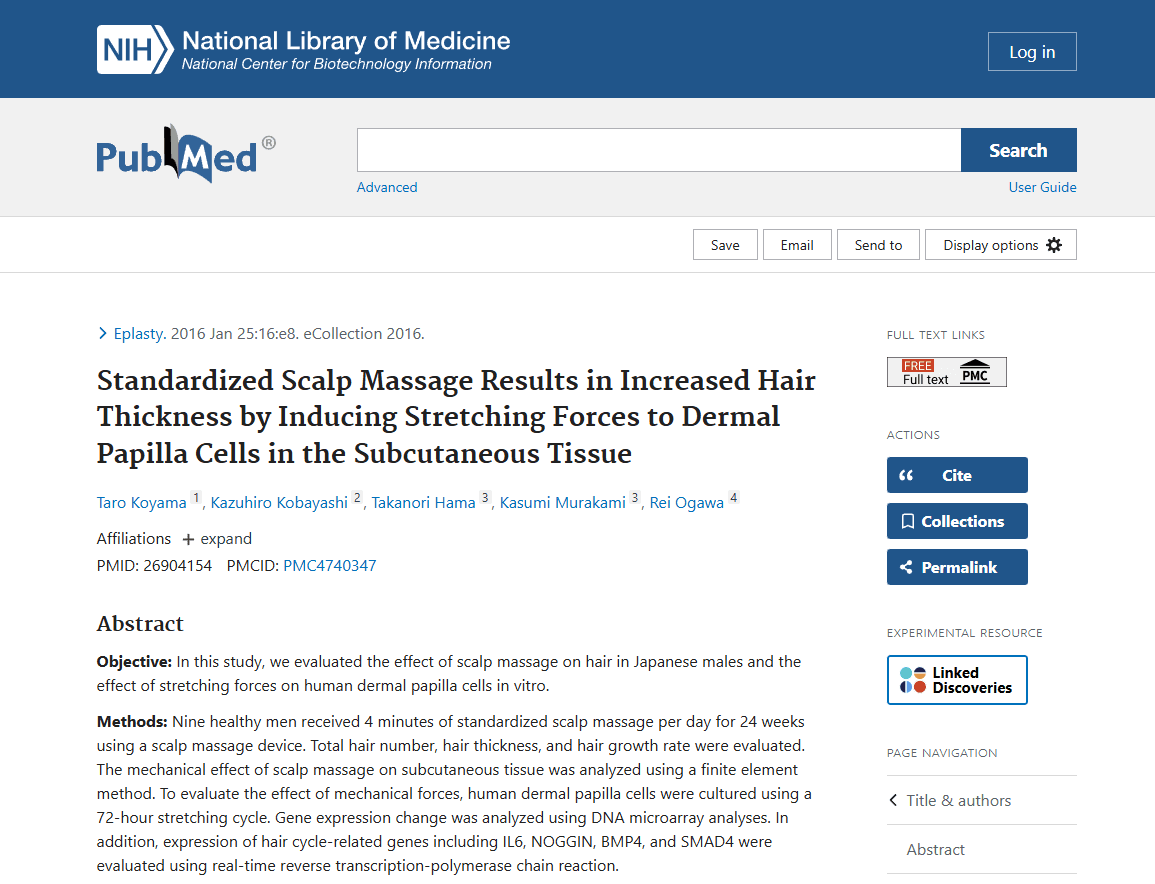
Standardized Scalp Massage Results in Increased Hair Thickness by Inducing Stretching Forces to Dermal Papilla Cells in the Subcutaneous Tissue
9 healthy men used a scalp massage device for 4 minutes a day on one side of the scalp for 24 weeks, with the other side left untreated as a control. Hair thickness on the massaged side rose significantly from baseline, from 0.085 mm to 0.092 mm. Hair count on the massaged side dipped temporarily at 12 weeks before recovering, and growth rate did not change. Comparing the massaged side directly against the control side did not reach statistical significance. Participants had no visible hair loss, and the study was partly funded by a device company.
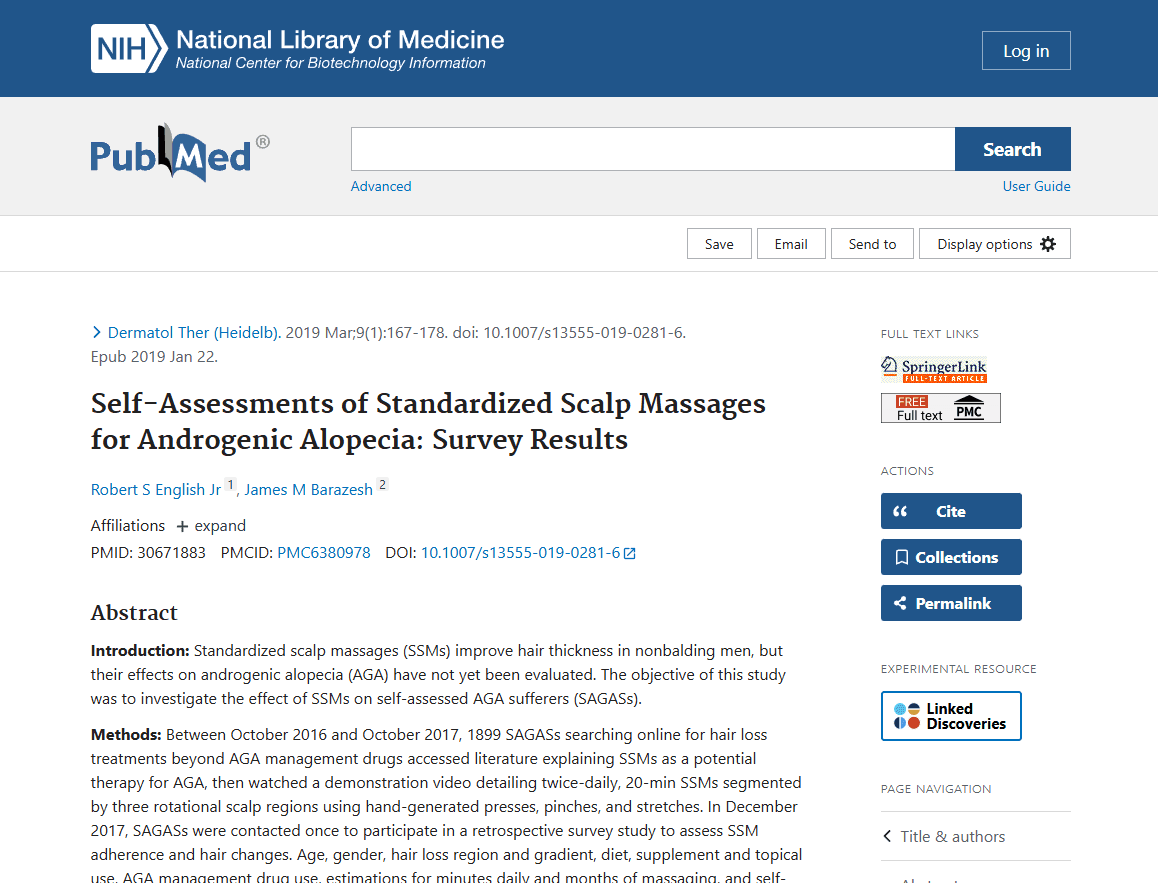
Self-Assessments of Standardized Scalp Massages for Androgenic Alopecia: Survey Results
327 people with androgenetic alopecia who tried a standardized scalp massage (median 11 to 20 minutes a day, average 7.4 months) filled in an online survey. 68.9% reported that their hair loss stabilized or that they saw regrowth, and more total massage time was linked to better self-rated results. This was a self-reported survey with no control group and a low response rate, so it shows what users perceived, not clinically measured outcomes.
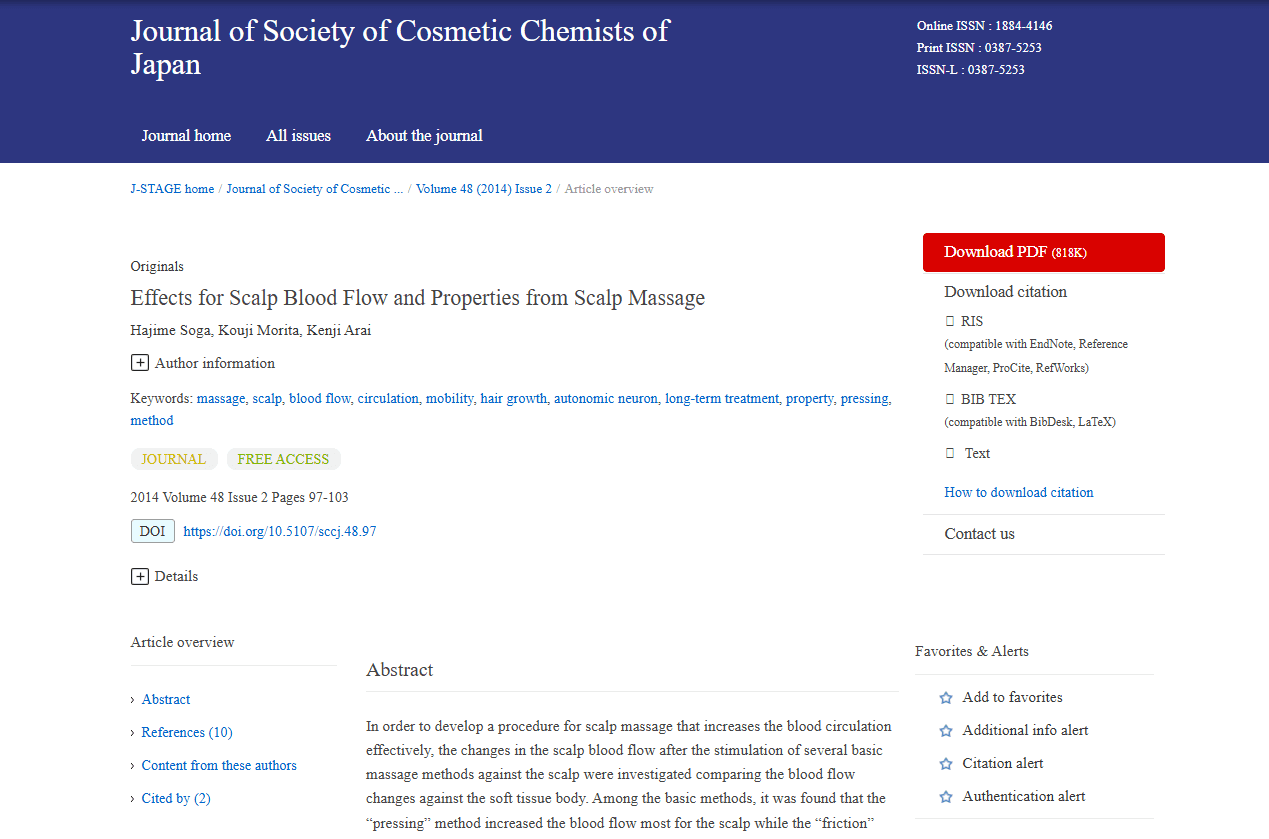
Effects for Scalp Blood Flow and Properties from Scalp Massage
Researchers tested several basic scalp massage techniques and found a 'pressing' method raised scalp blood flow the most. A single 3-minute session of this massage increased scalp blood flow by about 120% over baseline, an effect that lasted more than 20 minutes after treatment. Seven days of daily massage also increased scalp mobility, measured by hand. This study measured circulation and scalp mobility, not hair growth or thickness, and was conducted by researchers at a hair-care company. It tested manual massage technique, not this or any specific device.
Why daily consistency matters
The small controlled study used 4 minutes of massage each day for 24 weeks. The survey also found an association between greater total massage time and better self-rated outcomes. Together, these findings suggest that a regular routine is more relevant than occasional massage.
- Keep it short. A few comfortable minutes are easier to maintain than a long session.
- Be patient. The human study followed participants for 24 weeks; it did not establish a guaranteed timeline for visible results.
- Track, don't guess. If you want to monitor changes, take a monthly photo in similar lighting and with the same hairstyle.
A practical routine is 5 to 10 minutes a day, provided the pressure feels comfortable. Treat this as a habit for scalp care and relaxation, not a prescribed hair-loss treatment or a promise of regrowth.
Hands or a scalp massager?
Both hands and devices have been used in scalp-massage research. You do not need a device to massage your scalp; the best option is the one that feels comfortable and helps you keep the routine gentle.
Using your hands
Your fingertips give you direct feedback about pressure and comfort. Keep your nails short, use the pads of your fingers, and move the scalp gently rather than scratching or pulling through the hair.
Using a massager
A handheld massager can make the routine easier and reduce effort on your hands. The Crownmate Pulse Pro has soft, food-grade silicone nodes, vibration and kneading modes, and IPX7 water resistance. These features make it convenient to enjoy a comfortable massage as part of your routine.

The Pulse Pro can be used on dry hair, oiled hair or wet hair in the shower. If you use it with oil, follow the oil and device instructions, and clean the silicone nodes after use.

How to do a scalp massage
- Choose a comfortable starting point. You can massage dry hair, or use a little oil if it suits your scalp and the product instructions.
- Work in sections. Move across the front hairline, temples, crown and back of the head rather than concentrating on one spot.
- Press gently; don't scrub. Use the pads of your fingertips or the massager nodes. Make small, slow movements and avoid scratching or tugging at the hair.
- Keep the pressure comfortable. You should not feel pain. There is no need to press hard, pull hair or try to force the scalp to move.
- Keep it brief. Start with 3 to 5 minutes and build to 5 to 10 minutes only if your scalp remains comfortable.
- Make it a habit. Choose a consistent time, such as after a shower or before bed, and clean the massager nodes after use.
Who should be careful?
Avoid massaging over broken skin, cuts, active infections or irritated, inflamed patches. If you have psoriasis, dermatitis or another scalp condition, ask a dermatologist before using a massager. Stop if you notice pain, increased irritation or persistent soreness. Sudden, patchy or unexplained hair loss should be assessed by a healthcare professional rather than managed with massage alone.
Frequently asked questions
Will scalp massage make my hair grow?
Early research is encouraging: a small study found thicker hair after 24 weeks of daily massage, and most people in a survey of pattern hair loss reported stabilization or regrowth with a consistent routine. The evidence is still limited, so think of massage as a supportive habit rather than a replacement for proven treatments. Consistency matters most.
How long should I massage each day?
Start with 3 to 5 comfortable minutes. You can build to 5 to 10 minutes if it feels good. The small human study used 4 minutes daily, but it did not establish an ideal routine for everyone.
Do I need a massager, or are my hands enough?
Your hands are enough. A massager is optional and may make a routine easier to maintain. Use whichever method lets you keep pressure gentle and comfortable.
Can I massage with oil or serum?
You can massage with or without oil, depending on your scalp and the product instructions. Avoid products that irritate your scalp, and clean the massager after use. Massage does not prove that a serum will work better.
How long until I see a difference?
There is no reliable timeline. The small study measured outcomes over 24 weeks, but it did not establish that everyone will see visible changes. If you are concerned about thinning, consult a dermatologist.
Can I use a scalp massager every day?
Gentle daily massage is a reasonable routine if your scalp remains comfortable. Use light pressure and take a break if you develop soreness or irritation.
Where can I get the Crownmate Pulse Pro Massager?
Explore the Crownmate Pulse Pro Massager for product details and specifications.
Research and further reading
- Koyama et al. (2016): Standardized Scalp Massage Results in Increased Hair Thickness by Inducing Stretching Forces to Dermal Papilla Cells in the Subcutaneous Tissue
- English and Barazesh (2019): Self-Assessments of Standardized Scalp Massages for Androgenic Alopecia: Survey Results
- Soga et al. (2014): Effects for Scalp Blood Flow and Properties from Scalp Massage
- Shimada et al. (2013): Effects of Scalp Massage on Physiological and Psychological Indices
This guide is for general education and is not medical advice. Results vary from person to person. If you are concerned about hair loss, consult a qualified dermatologist.
Make scalp massage part of your routine
Explore the Pulse Pro's features, usage guidance and specifications.
View the Pulse Pro Massager