

Crownmate Guide
Derma Stamping for Hair Growth: How It Works and Why Serum Absorption Matters
Scalp microneedling is one of the better-studied add-on approaches for pattern hair loss. Research suggests it may improve results when combined with established topical treatments. Here is how the process works, what the studies actually show, and the precautions to understand before using a stamp at home.

Does derma stamping help hair growth?
Scalp microneedling has been studied as an add-on treatment for androgenetic alopecia, also known as pattern hair loss. Randomized trials and reviews report better outcomes when microneedling is combined with topical minoxidil than when minoxidil is used alone. The evidence is more limited for microneedling as a standalone treatment.
A derma stamp lets you treat small areas by pressing the needles vertically into the skin and lifting them straight out. It is a device for delivering controlled microneedling, not a proven hair-regrowth treatment by itself.
What is a derma stamp?
A derma stamp is a handheld microneedling device with a head of fine needles. You position it over one section of the scalp, press it straight down, lift it vertically, and then move to the next section. Unlike a roller, it does not need to travel across the skin while the needles are engaged.
The Crownmate Serum Stamp has 140 precision needles, a built-in 10ml serum chamber, and an adjustable depth setting from 0.25mm to 3.0mm. These are product specifications; they do not mean every depth or serum is appropriate for every scalp.
How microneedling works
Microneedling uses fine needles to create controlled, temporary micro-channels in the skin. The process is being studied for its effects on topical delivery and the skin's natural repair response. These four steps illustrate the general process.
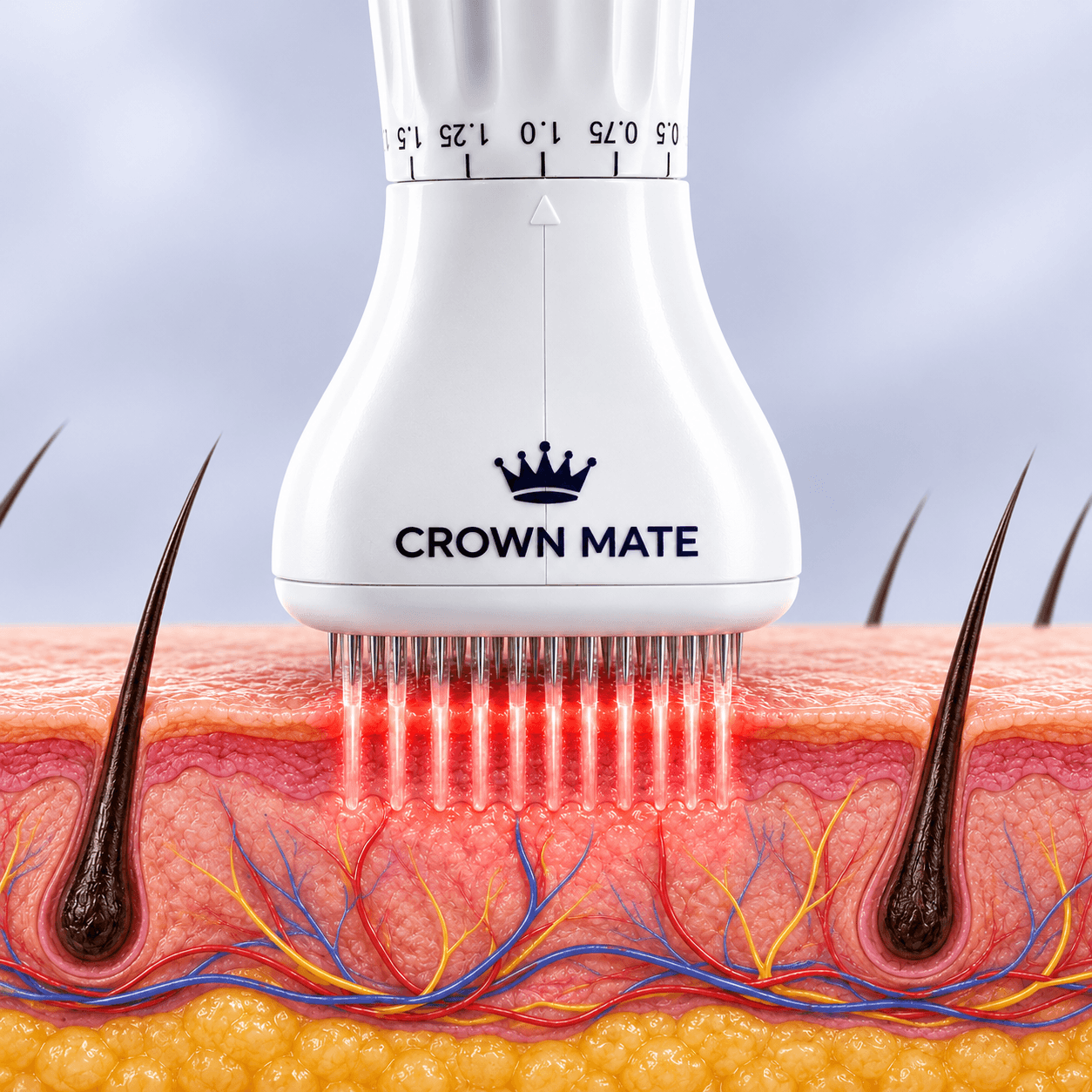
01
Micro-Channels
Fine needles create temporary micro-channels across the scalp's surface as the stamp is pressed and lifted.
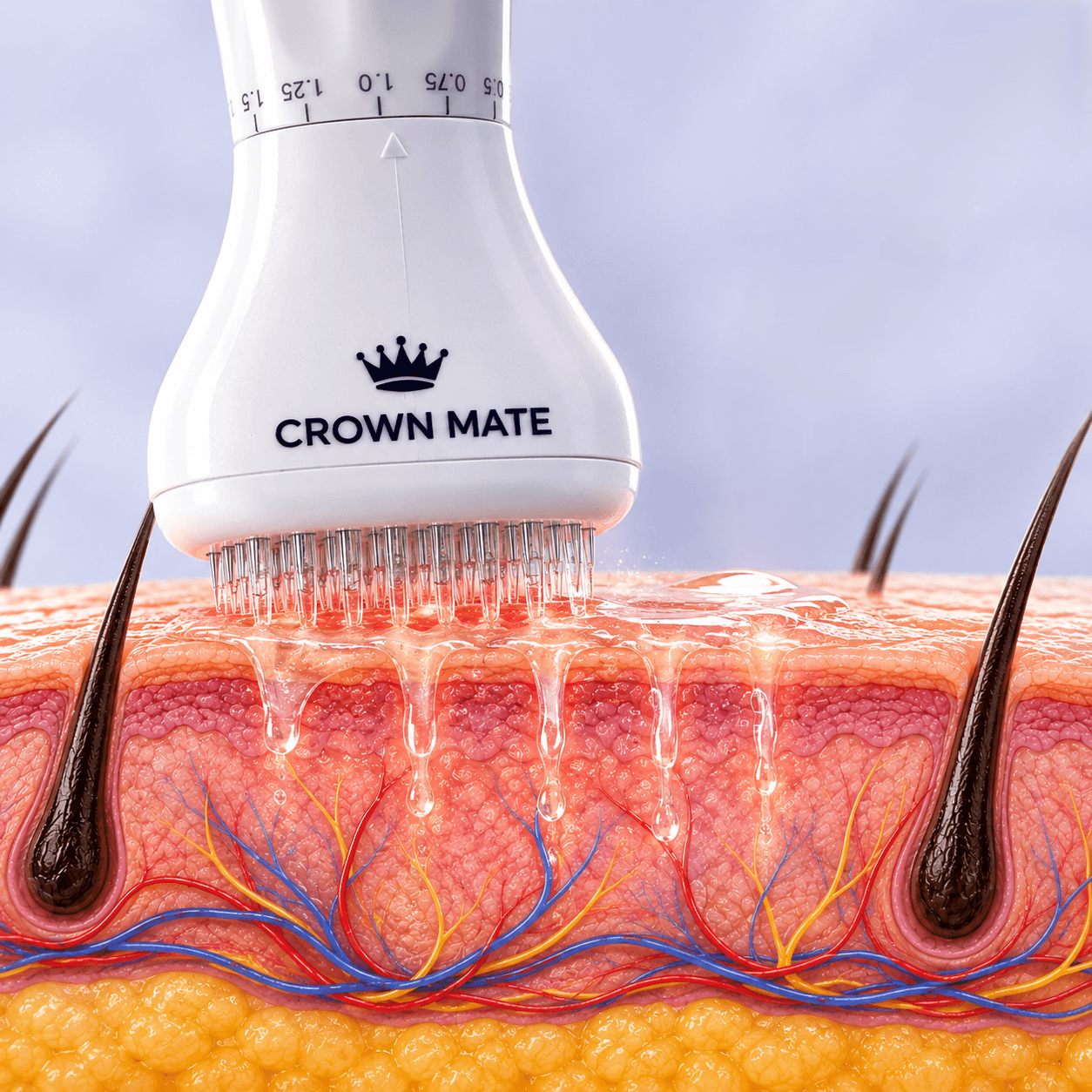
02
Enhanced Absorption
These micro-channels are understood to improve how well topical serums are absorbed into the scalp.
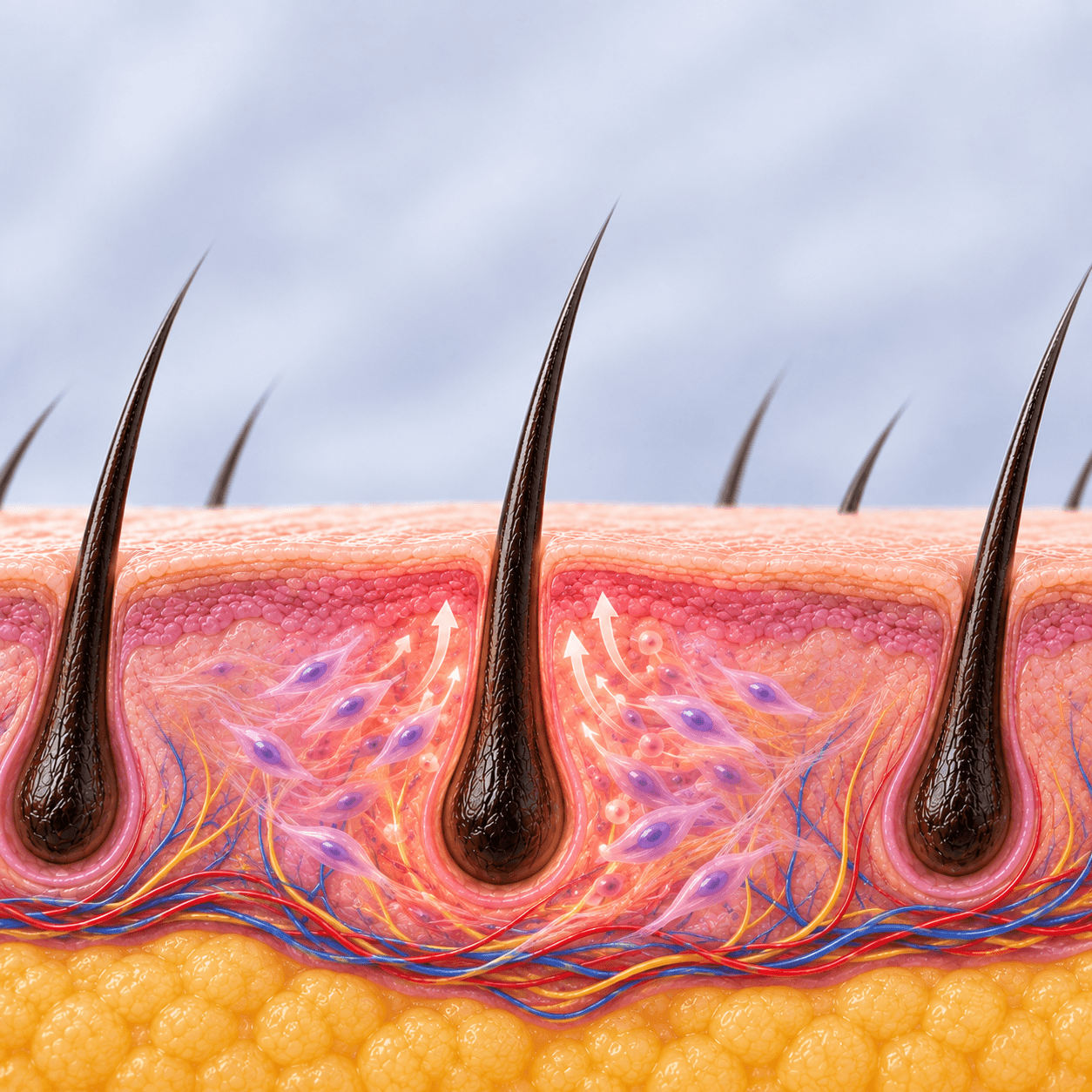
03
Natural Response
The skin's natural response to microneedling is thought to support the scalp's cellular renewal process.
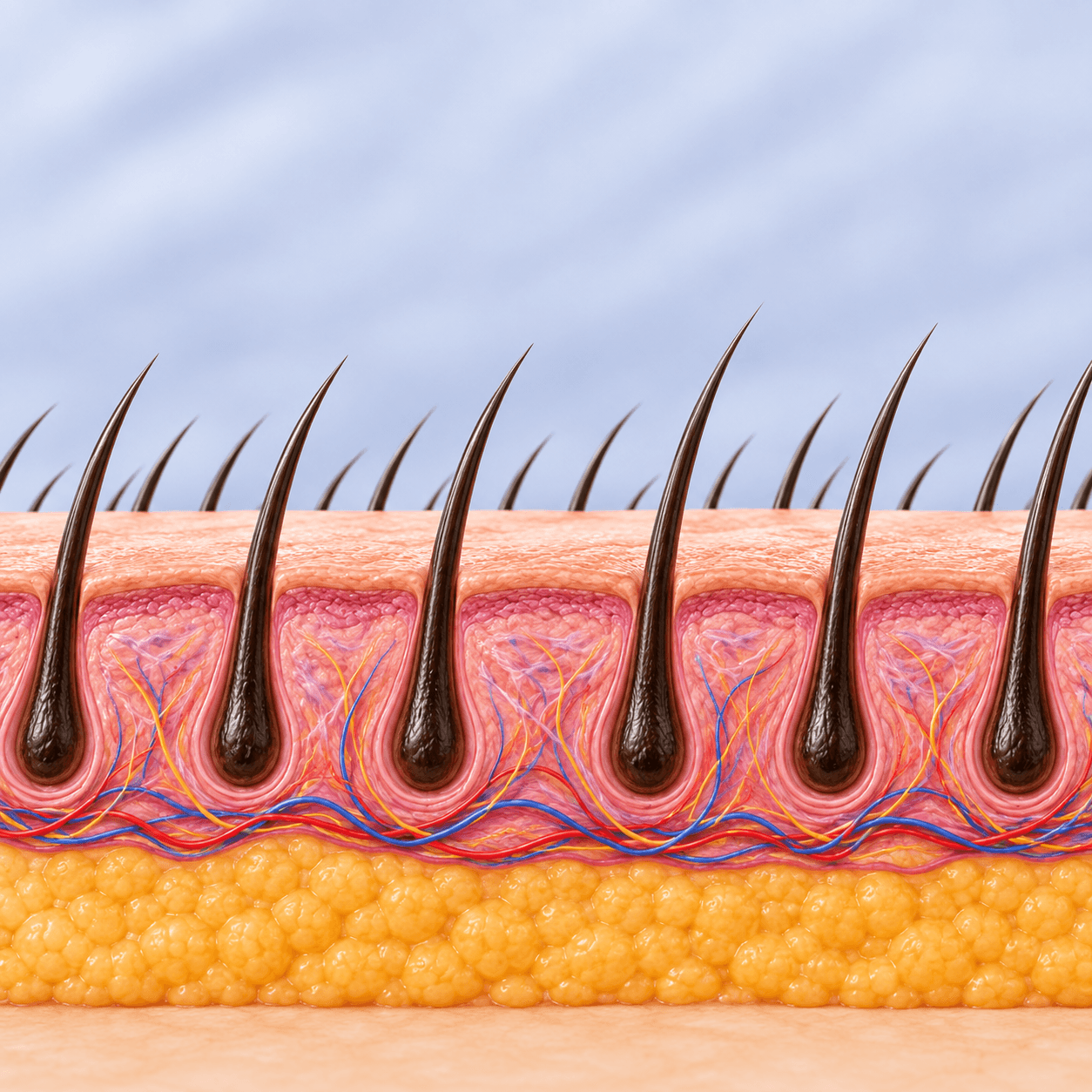
04
Consistent Use
Paired with a regular topical routine, consistent sessions may support a healthier-looking scalp over time.
Important: improved penetration is not automatically better or safer. Do not apply a cosmetic serum to freshly microneedled skin unless its instructions and a qualified clinician specifically support that use.
What the research shows
Randomized trial (2013)
A pilot study in the International Journal of Trichologyincluded 100 men with androgenetic alopecia. Both groups used 5% minoxidil, while one group also received weekly microneedling. At 12 weeks, the microneedling-plus-minoxidil group had a larger increase in hair count in the measured area than the minoxidil-only group. The study tested microneedling as an add-on, not as a replacement for minoxidil.
Systematic review (2021)
A review in Dermatology and Therapy assessed 22 clinical studies involving 1,127 people. It found generally favourable results when microneedling was used alongside other hair-loss treatments, but noted that the overall evidence quality was relatively low and that larger, better-designed trials were needed.
Meta-analysis of randomized trials (2025)
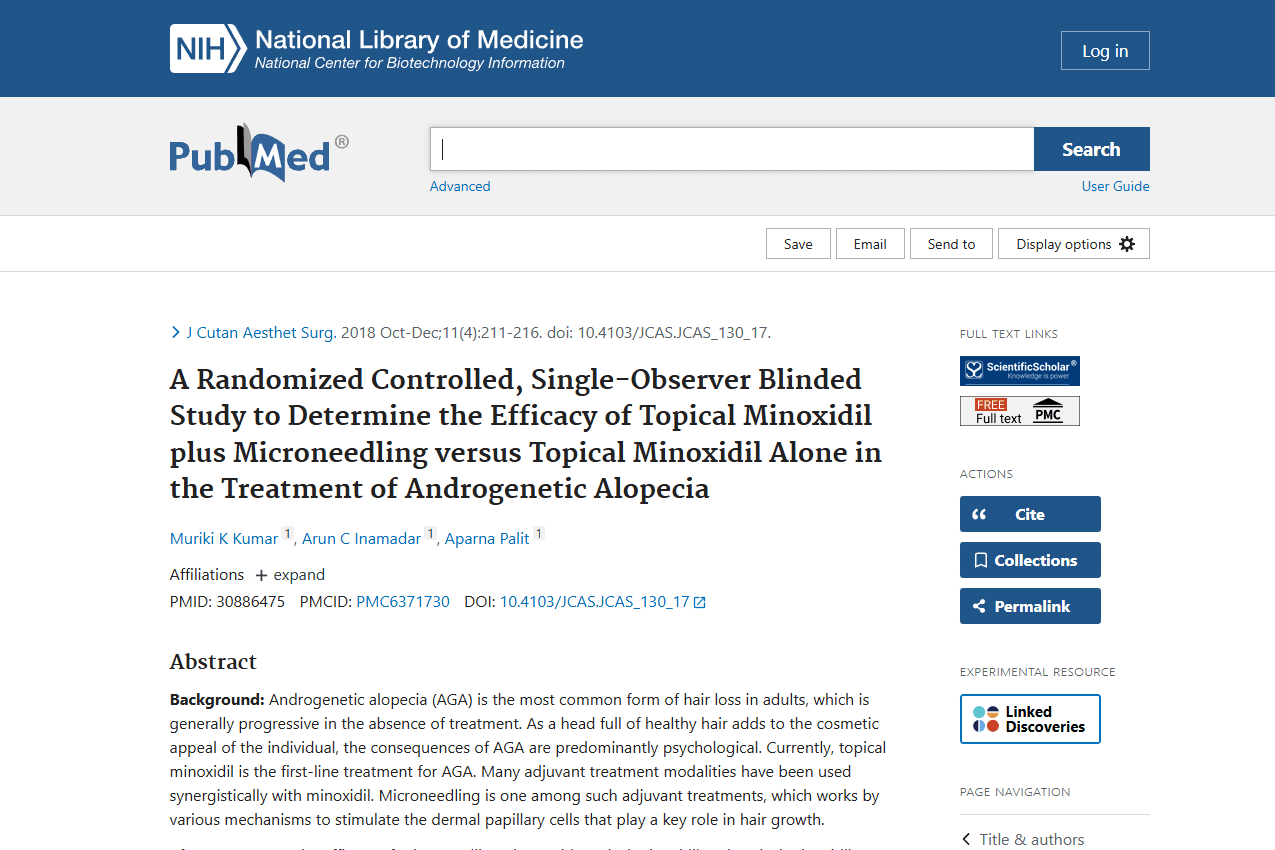
A meta-analysis in Archives of Dermatological Researchpooled 12 randomized trials involving 631 people. It reported improved hair-count outcomes when microneedling was combined with minoxidil compared with minoxidil alone. The studies used differing protocols, so the findings do not establish one ideal home-use depth or schedule.
Overall, the most consistent evidence is for microneedling as an adjunct to an established topical treatment. It does not show that every serum works better after stamping, or that the Crownmate Serum Stamp itself has been tested in a clinical trial.
Explore the published research
These studies examine microneedling for pattern hair loss, mainly as an add-on to topical minoxidil.
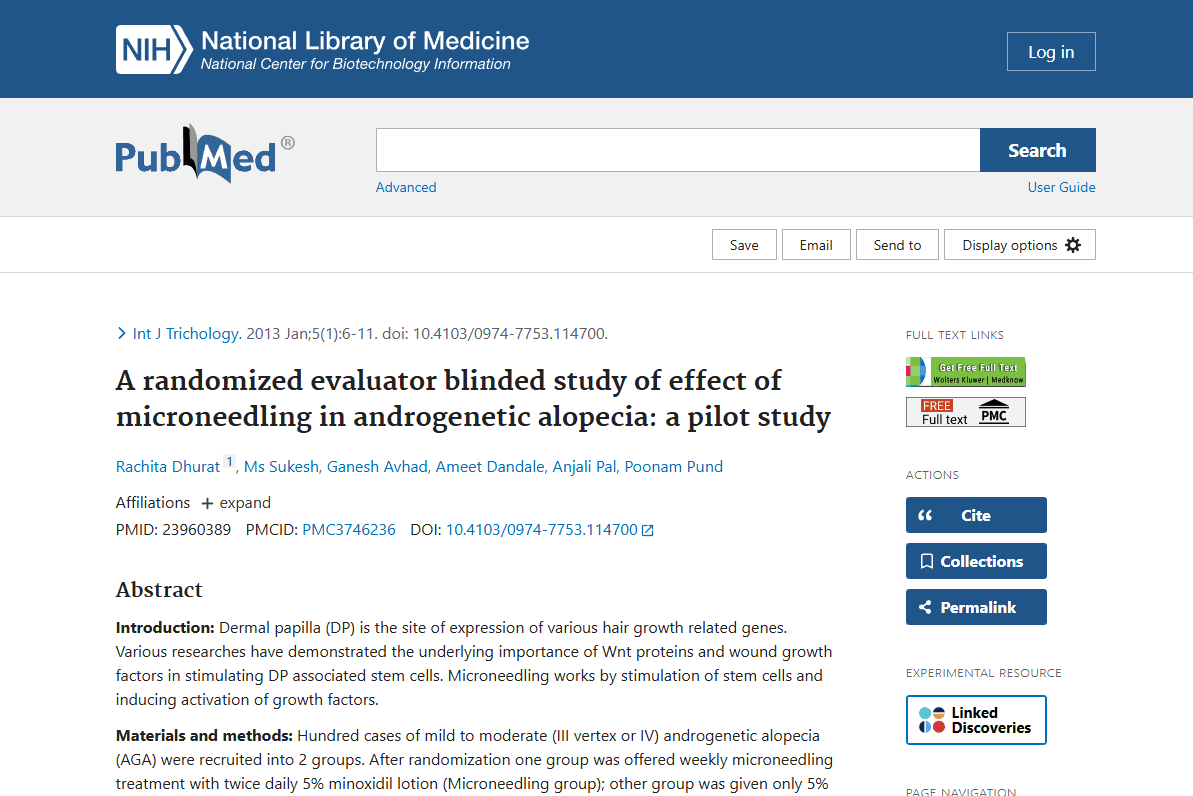
A Randomized Evaluator Blinded Study of Effect of Microneedling in Androgenetic Alopecia: A Pilot Study
100 men with androgenetic alopecia were split into two groups over 12 weeks. One group used weekly 1.5mm microneedling plus twice-daily 5% minoxidil; the other used minoxidil alone. Hair count rose by 91.4 hairs/cm² in the microneedling group, compared with 22.2 in the minoxidil-only group. 82% of the microneedling group reported over 50% improvement, versus 4.5% in the minoxidil-only group. Microneedling was tested as an add-on to minoxidil, not as a standalone treatment.
Microneedling and Its Use in Hair Loss Disorders: A Systematic Review
Researchers reviewed 22 clinical studies covering 1,127 people, spanning different needling devices, depths, and treatment schedules. Across these studies, microneedling generally improved hair loss outcomes as an add-on to other treatments. The authors rated the overall evidence quality as relatively low, noting significant differences between studies and calling for larger, better-designed trials to confirm best practices.
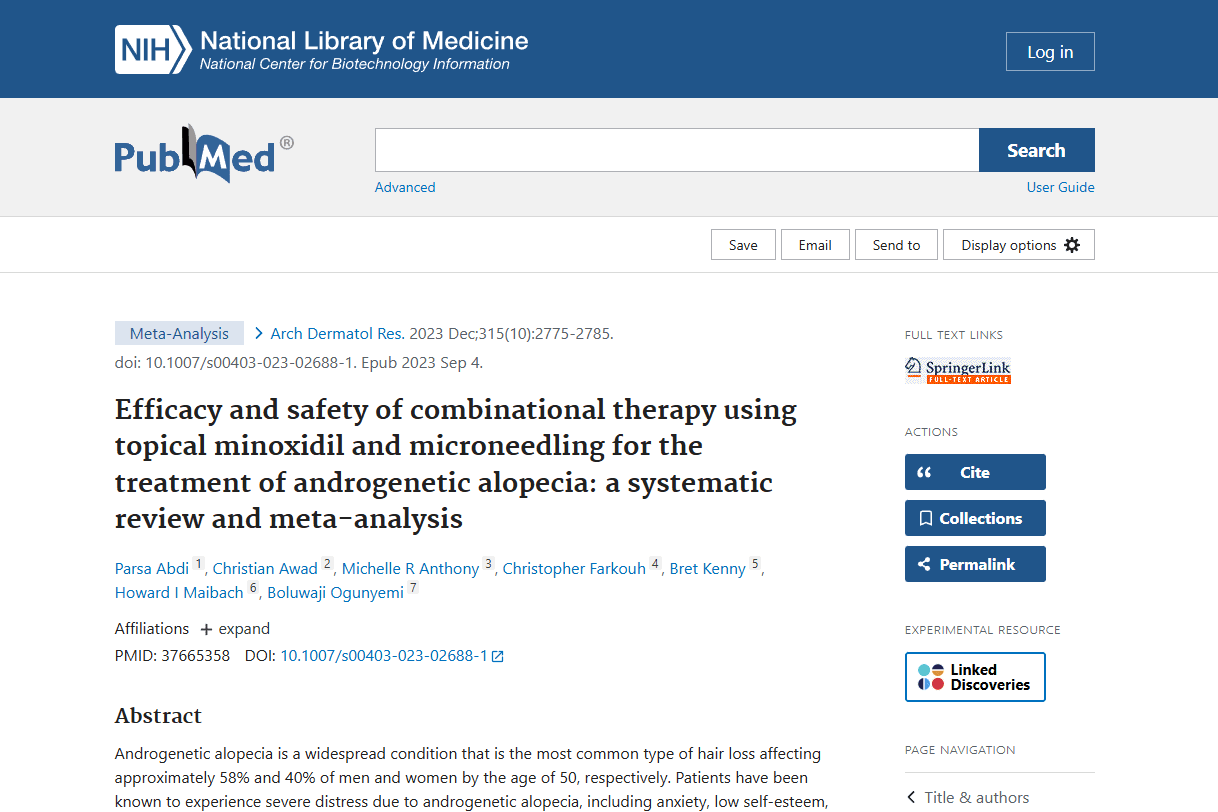
Evaluating the Efficacy and Safety of Combined Microneedling Therapy versus Topical Minoxidil in Androgenetic Alopecia: A Systematic Review and Meta-Analysis
This meta-analysis pooled 12 randomized controlled trials covering 631 people with androgenetic alopecia. Combining microneedling with minoxidil significantly improved hair count compared with minoxidil alone. Needling depth (1mm or less vs. more than 1mm) did not make a significant difference to the effect, though the studies varied widely in design, making the pooled result less precise.
Derma stamp vs derma roller: what is the difference?
Both tools use fine needles to create controlled micro-injuries, but their movement and handling differ. A stamp is pressed down and lifted vertically. A roller rotates across the skin, so the needles enter and exit at changing angles as the drum moves.
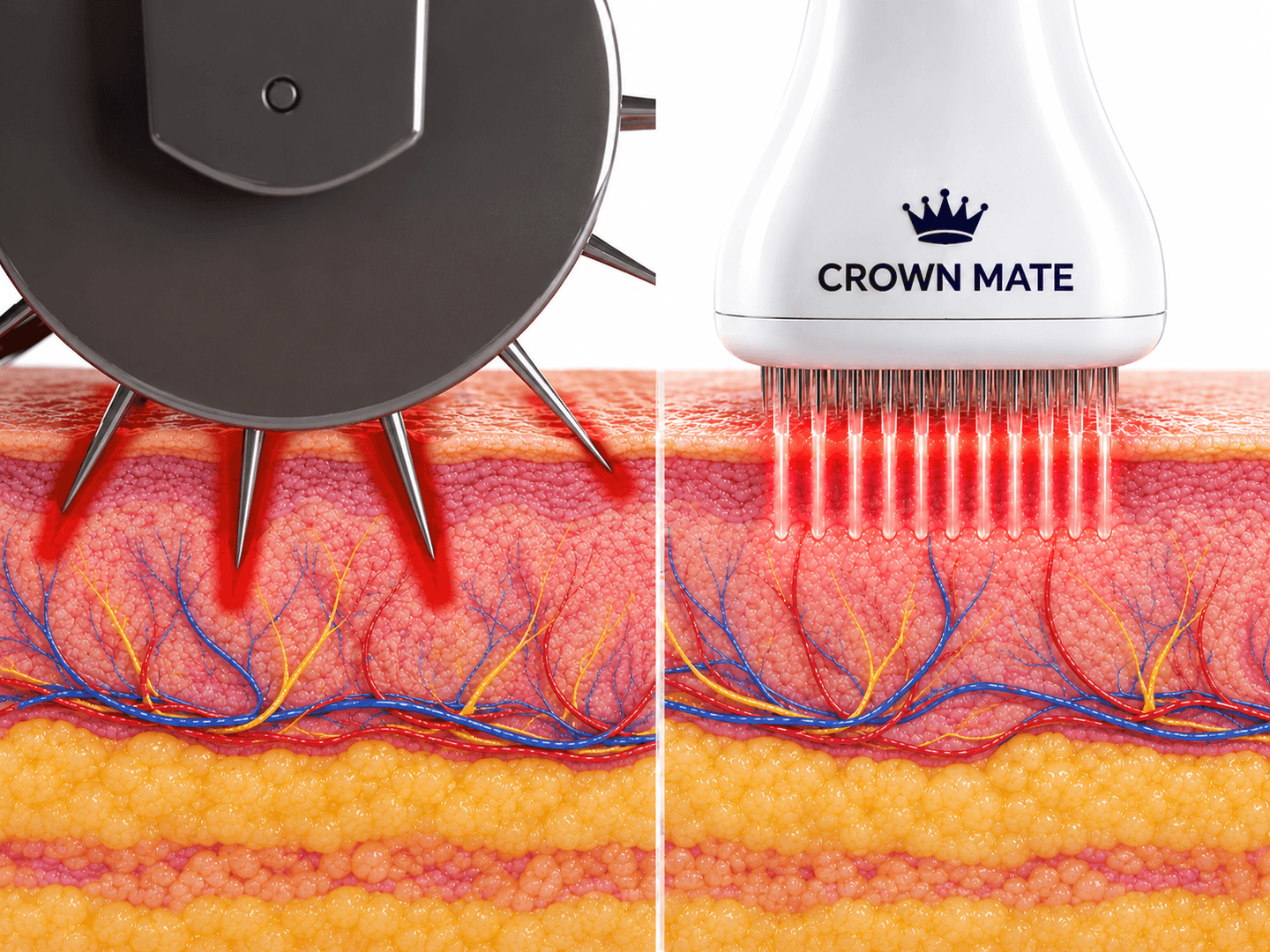
Entry and movement
A stamp is applied to one spot at a time with a straight press-and-lift motion. A roller moves over the scalp while its drum rotates. Technique and pressure matter with either device.
Depth control
Many rollers have a fixed needle length. The Crownmate Serum Stamp has an adjustable depth setting. Adjustable depth does not mean deeper settings are more effective or suitable for home use.
Serum chamber
A conventional roller has no built-in serum reservoir. The Crownmate stamp has a 10ml chamber, which is a product-design feature rather than proof that any serum can safely be delivered through freshly needled skin.
Working around hair
Stamping lets you work section by section and may be easier to position around hair. Avoid dragging the device across the scalp while the needles are in contact with the skin.
How to approach scalp microneedling safely
Needle depth and frequency should be chosen conservatively. Published trials often used clinician-supervised protocols that are not interchangeable with at-home instructions. There is no single evidence-based home schedule that suits everyone.
- Use only on a clean scalp and follow the device manual.
- Do not stamp over cuts, sunburn, irritation, infection or inflamed skin.
- Do not share the device or needle head with another person.
- Clean and disinfect the device exactly as its manufacturer instructs; allow it to dry and store it protected.
- Do not use excessive pressure or continue if you experience significant pain or bleeding.
- Do not apply cosmetic serums, acids, essential oils or other potentially irritating products to freshly needled skin unless a dermatologist has confirmed they are appropriate.
- Ask a dermatologist before use if you have psoriasis, eczema, a scalp infection, a tendency to form keloids, impaired wound healing, or take medicines that affect bleeding or immunity.
Start by reading the instructions supplied with your specific device. A shallow setting is not automatically risk-free, and deeper needling should not be attempted at home simply because a device offers that setting. Seek medical advice if you are unsure whether microneedling is appropriate for your hair-loss condition.
Who should avoid derma stamping?
Do not stamp over broken or irritated skin, active infections, or inflamed scalp conditions. People with psoriasis, dermatitis, a history of poor wound healing or keloid scarring, or conditions or medicines that affect healing should seek medical advice first. If hair loss is sudden, patchy, painful or accompanied by scaling, consult a dermatologist rather than self-treating.
How long until you see results?
Hair grows slowly. The 2013 trial assessed participants after 12 weeks, while other studies used different follow-up periods. If you are receiving treatment for pattern hair loss, your dermatologist can help set a realistic review point. Monthly photographs taken in similar lighting can help track visible changes.
Frequently asked questions
Does derma stamping work on its own?
The strongest clinical evidence is for microneedling used alongside topical minoxidil. Evidence for microneedling alone is much more limited.
Which serum should I use?
The main clinical evidence involves minoxidil, not general cosmetic serums. Ask a dermatologist which treatment is appropriate and whether it can be used around microneedling sessions.
What needle depth should I start with?
There is no universal home-use depth recommendation. Follow your device instructions and seek clinical guidance before using deeper settings. More depth does not automatically mean better results.
Is a derma stamp better than a derma roller?
They use different movements. A stamp presses vertically in one spot at a time, while a roller rotates across the skin. Suitability depends on the device, technique and the user's needs.
Does microneedling hurt?
Sensation varies with needle depth and individual sensitivity. Significant pain or bleeding is a reason to stop rather than push through.
Can I apply serum immediately after stamping?
Do not assume that a cosmetic serum is safe on freshly needled skin. Microneedling can increase penetration and irritation risk. Follow clinical advice and the product's instructions.
Where can I get the Crownmate Serum Stamp?
Explore the Crownmate Serum Stamp for product details and specifications.
Research and further reading
- Dhurat et al. (2013): A Randomized Evaluator Blinded Study of Effect of Microneedling in Androgenetic Alopecia
- English et al. (2021): Microneedling and Its Use in Hair Loss Disorders — A Systematic Review
- Ahmed et al. (2025): Combined Microneedling Therapy versus Topical Minoxidil — A Systematic Review and Meta-Analysis
This guide is for general education and is not medical advice. Microneedling is not suitable for everyone. Consult a qualified dermatologist about hair loss, diagnosis and treatment options.
Explore the Crownmate Serum Stamp
See the product images, features and specifications.
View the Serum Stamp